
Reading Time: mins
If you haven’t spent much time thinking about surgical operations, you may not have heard about robot-assisted surgery/robotic surgery. A/Prof Michael Talbot saw the potential of this platform many years ago and performed the first ever cases of bariatric, upper gastro-intestinal and upper gastro-intestinal cancer surgery in Australia. Since then robotic surgery has been growing in popularity around the world for both surgeons and patients, providing real benefits for many types of procedures. But what is it?
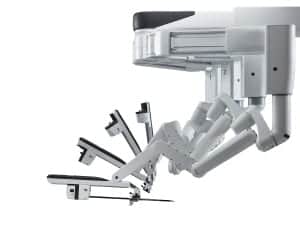
Robotic surgery is a more modern form of keyhole (laparoscopic) surgery, and we believe will gradually replace it over the next decade. The Oxford Dictionary defines robotic surgery as:
“Surgery carried out using mechanical arms controlled by the surgeon and bearing surgical instruments and a camera, especially to avoid the need for large incisions”.
The surgeon is still in control of the procedure; the robot cannot make up for any lack of skill in the surgeon. In fact, as robot-assisted surgery is still fairly new, not all surgeons are capable of utilising this technology. Surgeons who have performed high volumes of these procedures typically deliver optimum outcomes.
Robotic surgery is ideal for complex operations on the stomach, as it allows access to cramped areas of the abdomen. Robotic bariatric surgery provides a magnified, high-definition 3D view of the surgery site while allowing for a greater range of motion using just a few small incisions.
There are many benefits to robotic surgery in general, but for complex bariatric procedures, a surgical robot becomes even more useful.

Robotic surgery is particularly useful for bariatric revision surgery. This is because robotics can provide added precision when dealing with scar tissue or adhesions from a former surgery. Revision bariatric surgery is often complex in nature, so the added benefits of a bariatric surgeon being able to perform the procedure robotically can make a big difference.
Robotic surgery is on average 20 minutes longer than similar surgeries done with traditional keyhole methods, however for some it’s a bit faster. The main drawback of choosing to have your bariatric surgery procedure performed robotically is the associated costs involved. The advanced technology is very expensive for a hospital to invest in initially (these machines cost in excess of a million dollars). This means that surgical robots can be hard to access as they are not installed in every operating room. Also not every tier of private health insurance covers the extra costs. A/Prof Michael Talbot has access to a surgical robot in the hospitals he operates in, at little or no additional cost depending on your level of health insurance cover.
Contact us to discuss symptoms, timing and the best treatment plan for you.

P: 02 9553 1120
F: 02 9553 7526
E: info@uppergisurgery.com.au

Copyright © 2026. Upper GI Surgery. All rights reserved.


